
Scenery-sational Multi-Frame Framed Wall Art Thatll Make Your Walls Swoon
You may also like

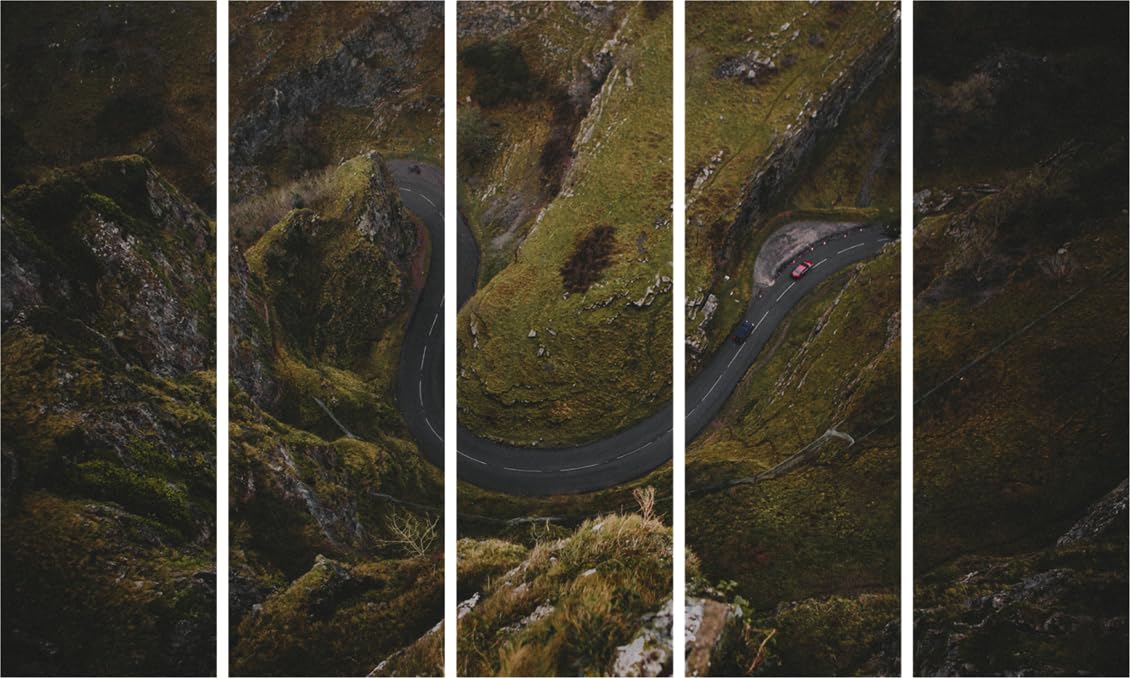
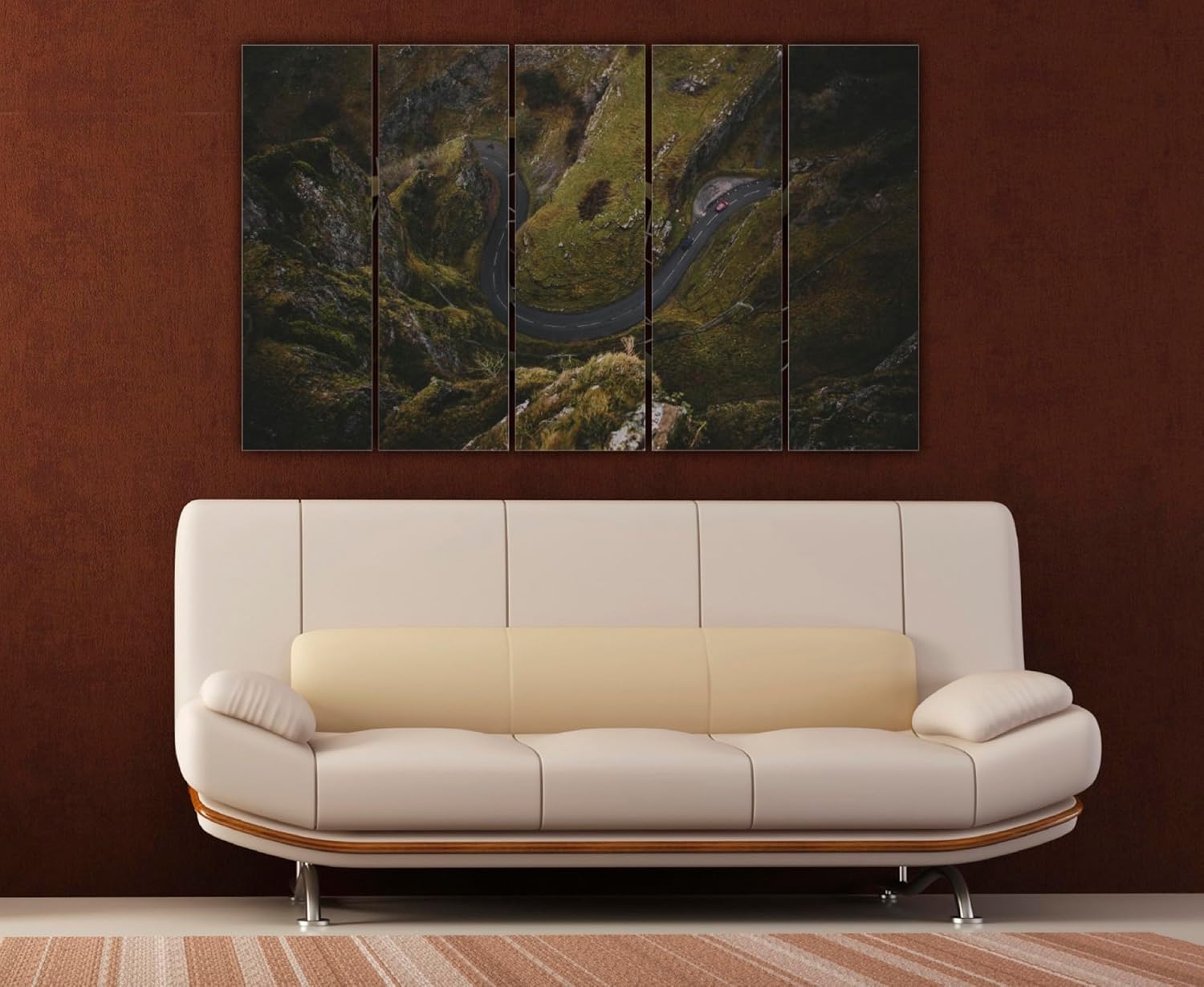
Moolwan 5-Panel Mountain Road Canvas Wall Art Painting (127x76cm) - Aerial Landscape Multi-Frame
You've measured your living room wall three times. Maybe four. The tape measure says 360 cm, but you're still not confident because the sofa sits 6 inches out and the corner has that window frame. Every online guide says something different, and none account for the fact that your builder's cream walls reflect more light than those styled grey walls in product photos. You keep second-guessing: is 127cm actually right for a 12-foot wall?
Here's what 127cm means in your space. On a standard 360cm (12 ft) living room wall—the size most Indian apartments have behind the sofa—this 5-panel canvas covers 35% of the width. That leaves 116cm of wall space on the left, 116cm on the right. From your sofa, sitting 8-10 feet back, this creates balanced framing. The panels aren't fighting for attention; they're anchoring the wall without overwhelming the cream paint or your wooden coffee table.
The mossy greens and dark greys in this aerial mountain scene work differently against Indian home walls than they do in photos. Your walls are probably cream, off-white, or that builder's light yellow. The earth tones in this canvas—moss green mixed with charcoal grey rock—provide depth without clashing. The small red car accent prevents the piece from feeling too monotone. During morning sunlight, the greens brighten. Under evening LED, the greys add drama without going muddy.
Why 127cm Works on 12-Foot Walls (and What Happens If You Go Smaller or Bigger)
Most living room walls in Indian homes range from 10-14 feet. If your wall is 12 feet (360cm), here's the coverage math:
127cm canvas on 360cm wall:
- Canvas width: 127cm
- Remaining wall space: 233cm (split left-right: 116cm each side)
- Coverage percentage: 35%
- Visual effect: Balanced focal point, proportional spacing
If you went smaller (100cm):
- Coverage drops to 28%
- The 5 panels start looking disconnected
- 260cm of empty wall space feels awkward
- Common mistake: "Looks floaty, not intentional"
If you went larger (150cm):
- Coverage jumps to 42%
- Only 105cm left on each side
- Works if your wall is furniture-free
- Risk: Feels cramped if sofa arms extend 6-8 inches
Your sofa is probably 180-210cm wide (6-7 feet). Standard design logic says canvas should be 2/3 the sofa width. That math points to 120-140cm canvas width. At 127cm, this hits the middle of that range. The 5-panel format helps—instead of one solid block, the separated frames create rhythm. Your eye moves across panels, not hitting a wall of canvas.
What These Colors Will Actually Look Like (Morning vs. Evening Light)
Product photos show this canvas under studio lighting with grey walls. Your reality is different. You have cream or off-white walls, morning sunlight through east windows, and warm yellow LEDs at night.
Morning light (6-10 AM):
The mossy greens in the mountain landscape brighten. Natural light brings out the texture of the rocks and the depth of the winding road. The aerial perspective feels more expansive. If your living room has east-facing windows, this is when the canvas looks most vibrant—the greens pop against cream walls without going neon.
Afternoon (12-4 PM):
Depending on window placement, you might have indirect light. The greys and dark tones in the rocks become more prominent. The canvas adds depth without overwhelming. This is the most neutral viewing time—colors appear closest to product photos.
Evening LED (7-11 PM):
Warm yellow LED bulbs (2700-3000K, standard in Indian homes) make the greens slightly warmer. The charcoal greys anchor the composition. The red car accent becomes a subtle focal point. The canvas doesn't wash out under artificial light—the earth tones hold their presence.
Monsoon/overcast days:
The greys in the mountain rocks match the mood. The canvas doesn't feel out of place on cloudy days. Some bright canvases (neon abstracts, beach scenes) can feel jarring in monsoon light. This aerial landscape works year-round.
Your walls influence how you perceive these colors. Cream walls (most common) reflect warm tones, making the greens appear slightly warmer. Off-white walls create truer color representation. Light yellow builder walls push the greens toward olive. If you've repainted with grey or beige, the contrast increases—the greens will pop more.
Installation Takes 15 Minutes (Even If You're Not Handy)
You might be worried about installation, especially if you're renting and that ₹50,000 deposit is on the line. Here's what this involves.
What's included:
- 5 pre-framed canvas panels (pinewood frames, 1.5 inches thick)
- Hanging hardware pre-attached to each frame
- Total weight: 3kg (split across 5 panels—roughly 600g each)
What you need:
- Measuring tape
- Pencil for wall marking
- Nails (5-6 pieces, 2-inch size)
- Hammer
- 15-20 minutes
Rental-friendly approach:
The nails required are small (2-inch, standard picture-hanging size). These leave pin-sized holes that disappear with a dab of toothpaste or wall putty when you move out. You're not drilling or mounting heavy anchors. Most landlords and society regulations allow picture hooks—these are standard wear-and-tear items.
Layout tip:
The 5 panels are designed to hang with small gaps between them (typically 2-3 inches). Measure the wall width (360cm), subtract the canvas total width (127cm), divide the remaining space to calculate gaps. Mark lightly with pencil. Hang the center panel first, then work outward left and right. Step back every two panels to check alignment.
If you're genuinely nervous about nails, 3M Command strips (rated for 1kg each) work. Use 2 strips per panel for security. Cost: ₹40-60 per strip set. The canvas is splash-proof coated, so even if you're hanging this in a dining area or near a kitchen wall, minor moisture exposure won't damage it.
How This Compares to the Other Sizes You've Been Considering
You've probably saved multiple sizes in your browsing history—100cm, 127cm, 150cm versions of similar landscape canvases. Here's the honest difference.
100cm canvas (smaller option):
- Coverage: 28% of a 12 ft wall
- Price: Probably ₹2,496 (₹500 less)
- Best for: Walls under 10 feet, bedrooms, narrower spaces
- Trade-off: The 5 panels lose impact. At 100cm, each panel is narrower, making the aerial perspective less immersive. Common feedback: "Looks cute but not commanding."
127cm canvas (this one):
- Coverage: 35% of a 12 ft wall
- Price: ₹2,996
- Best for: 10-14 ft walls, living rooms, standard sofas
- Balance: Proportional coverage, panels retain depth, price-to-impact ratio is ideal for most Indian homes
150cm canvas (larger option):
- Coverage: 42% of a 12 ft wall
- Price: Probably ₹3,496 (₹500 more)
- Best for: 14 ft+ walls, furniture-free feature walls, double-height ceilings
- Risk: If your wall has windows, switches, or furniture extending outward, 150cm starts feeling cramped. You gain 23cm of canvas width but lose breathing room.
vs. marketplace canvas (₹800-1,200):
Lower-priced options typically use 280 GSM canvas (versus 340 GSM here), which shows texture inconsistencies under close viewing. Frames are often particle board or thin MDF, not kiln-dried pinewood. After 6-12 months, humidity causes warping. The inks fade under sunlight. You save ₹1,800 upfront but replace it within a year. This canvas uses eco-solvent UV-resistant inks and moisture-resistant coating—it's designed for Indian monsoons and summer heat (70-85% humidity, 5°C-45°C temperature swings).
vs. single large canvas (non-paneled):
A single 127x76cm canvas would feel like one solid block. The 5-panel format creates visual movement—your eye follows the winding mountain road across panels. It adds dimension without extra depth. If you're comparing this to a single-piece canvas at similar price, the multi-frame design offers more dynamic interest.
What This Will Look Like in Your Living Room (Not Just Online Photos)
You've probably zoomed into product photos, trying to imagine this on your wall. Here's what changes between photos and reality.
Viewing distance matters:
From your sofa (8-10 feet away), you see the full composition—the aerial mountain landscape, the winding road, the mossy rocks. The 5 panels merge visually into one scene. The gaps between frames disappear from this distance. Walk closer (3-4 feet), and the individual panels become distinct. You notice the texture of the canvas, the depth of the frames.
Ceiling height context:
Most Indian homes have 9-10 ft ceilings. At 76cm tall, this canvas sits comfortably at eye level when hung. Standard placement: bottom edge 24-30 inches above the sofa back or 60-65 inches from the floor. It doesn't reach toward the ceiling awkwardly, and it doesn't sit too low. The horizontal orientation (127cm wide, 76cm tall) complements standard room proportions.
Furniture interaction:
Your coffee table is probably wooden—teak, sheesham, or walnut finish. The earthy greens and greys in this canvas complement wood tones without matching them exactly. If you have beige or brown fabric sofas (common in Indian living rooms), the charcoal grey in the rocks provides contrast without clashing. The small red car accent adds a pop that prevents the entire setup from feeling too neutral.
With other decor:
This works if you have plants (real or artificial). The mossy greens echo indoor greenery without looking redundant. If you have brass or copper pooja items, the earth tones don't compete. If your curtains are cream, beige, or grey, the canvas integrates naturally. It struggles if you've gone for bright jewel tones (royal blue walls, magenta curtains)—the muted landscape gets lost.
Guest perception:
Mother-in-law approval metric: High. This is recognizable subject matter (mountains, nature, adventure) without being too abstract or modern. It doesn't require explanation. Guests will ask "Where is this?" (natural conversation starter) rather than "What is this supposed to be?" If someone notices your decor, it's for the intentional placement, not because it's jarring.
Quick Specifications
- Dimensions: 127cm (W) x 76cm (H) x 0.6cm (D)
- Panel count: 5-panel multi-frame design
- Weight: 3kg total (approx. 600g per panel)
- Canvas material: 340 GSM cotton, moisture-resistant coating
- Frame: 1.5-inch kiln-dried pinewood (12% moisture content)
- Inks: Eco-solvent, UV-resistant
- Coating: Splash-proof finish
- Colors: Mossy green, charcoal grey, earth tones, red accent
- Subject: Aerial mountain landscape with winding road
- Ideal placement: Living rooms, hallways, bedrooms, offices
- Wall compatibility: 10-14 ft walls (optimal at 12 ft)
- Price: ₹2,996
- Delivery: 5-6 days metro cities, 6-8 days tier-2/3 cities
- Installation: Rental-friendly, nail or Command strip mounting